UNDERGRADUATE PROGRAM

ELECTRONICS &
COMMUNICATION.

Pioneering the future of connectivity, VLSI design, and embedded systems through rigorous academic and hands-on technical training.

PROGRAM OVERVIEW

BRIDGING HARDWARE & SOFTWARE.

The Electronics and Communication Engineering (ECE) program is designed to equip students with a profound understanding of electronic devices, circuits, communication networks, and electromagnetics.

With state-of-the-art laboratories and a curriculum aligned with industry demands, our students dive deep into the realms of the Internet of Things (IoT), artificial intelligence in electronics, and next-generation 5G/6G communication systems.
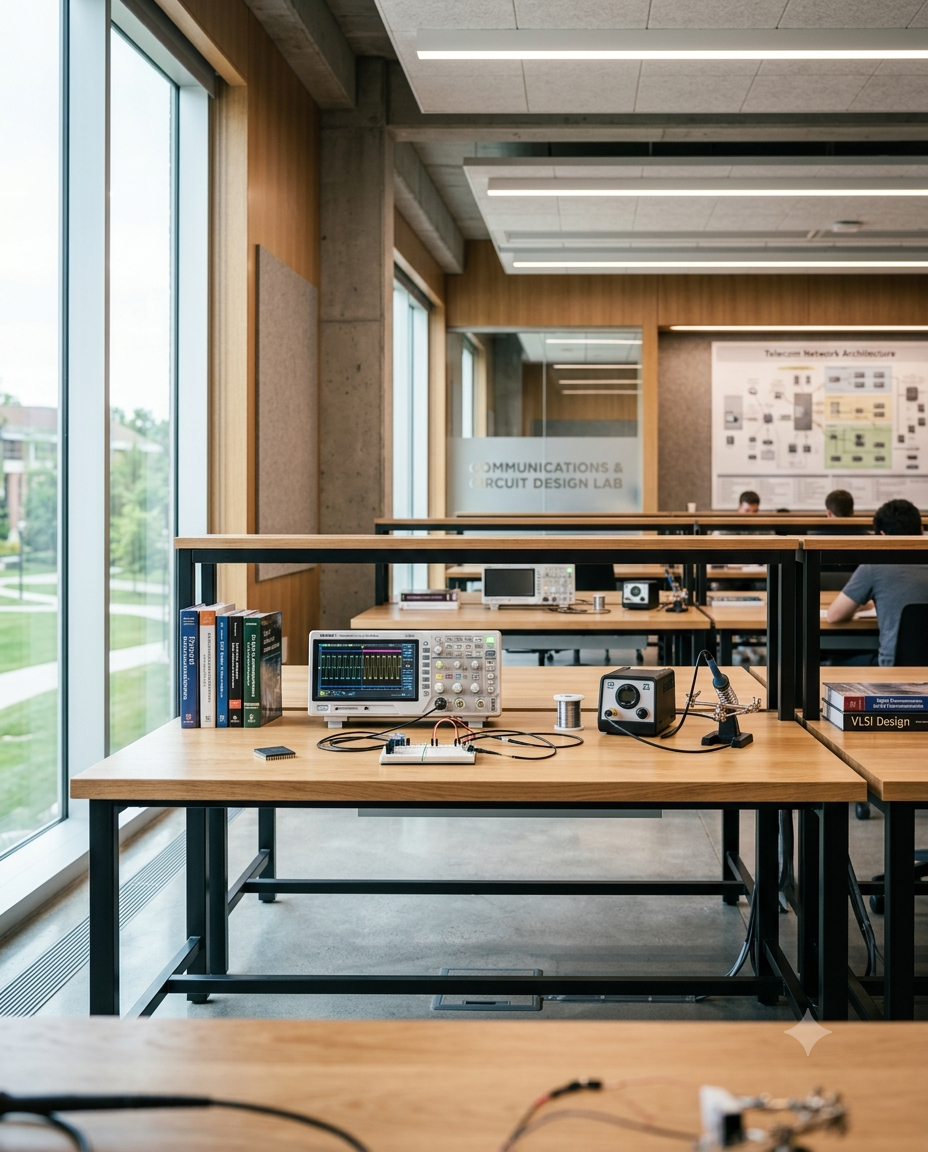
ECE Laboratory Overview
Degree Awarded

B.E. (Undergraduate)

Duration

4 Years (8 Semesters)

Affiliation

VTU, Belagavi

Approval

AICTE, New Delhi

DEPARTMENT VISION

EMPOWERING
INNOVATORS.

To be a premier center of excellence in Electronics and Communication Engineering, fostering cutting-edge research, and producing ethically strong, globally competent engineers.

DEPARTMENT MISSION
  • M1 Impart rigorous technical education emphasizing fundamental concepts and practical hands-on applications.
  • M2 Bridge the industry-academia gap through intensive collaborations, internships, and advanced skill development.
  • M3 Promote research, innovation, and entrepreneurship in emerging technologies like VLSI, IoT, and AI.
THE SDMIT ADVANTAGE

WHY CHOOSE ECE?

We transform students into industry-ready professionals by bridging the gap between theoretical knowledge and real-world engineering challenges.

  • 01

    Industry-Aligned Curriculum

    Master modern EDA tools, microcontroller programming, and networking protocols demanded by top-tier tech companies.

  • 02

    Expert Faculty Mentorship

    Learn from seasoned academicians and researchers dedicated to nurturing your technical and analytical capabilities.

  • 03

    Core & IT Placements

    Benefit from a stellar placement record, with graduates securing roles in both core electronics manufacturing and top IT software firms.
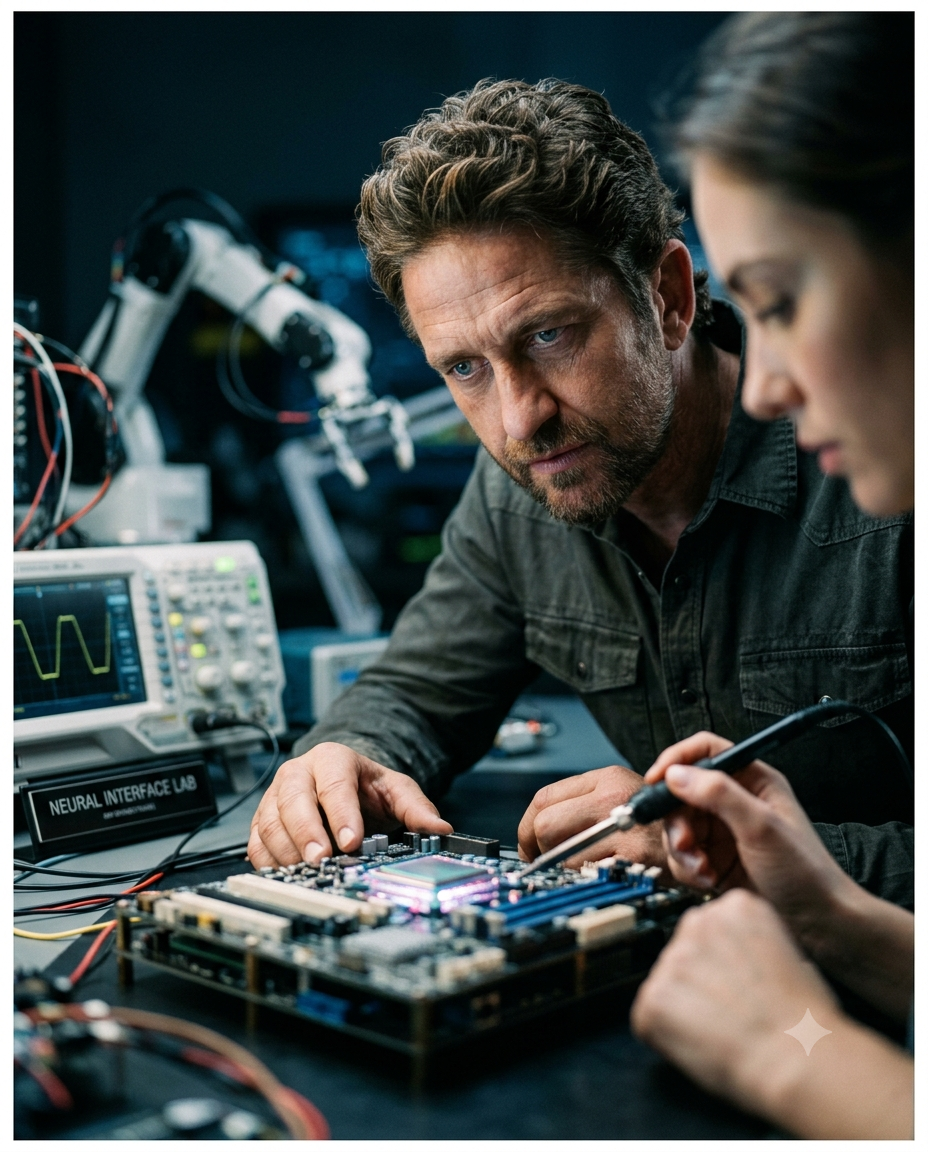
ECE Students innovating
CORE CURRICULUM

WHAT YOU
WILL STUDY.

A carefully curated syllabus that balances theoretical engineering foundations with intensive practical application.

  • 01 Analog & Digital VLSI Design
  • 02 Embedded Systems, Microcontrollers & IoT
  • 03 Digital Signal & Image Processing (DSP)
  • 04 Wireless, Satellite & Optical Communication
ACCREDITATION & STANDARDS

PROGRAM OUTCOMES.

Defining the benchmark of our educational excellence and the core competencies of our engineering graduates.

  • PEO 1: To prepare graduates with a solid foundation in engineering, science, and mathematics to solve real-world electronics and communication challenges.
  • PEO 2: To equip students with modern design tools and analytical skills for successful careers in core electronics, IT, and allied industries.
  • PEO 3: To instill professional ethics, leadership qualities, and lifelong learning capabilities to adapt to rapid technological changes.
  • PO 1: Engineering Knowledge: Apply knowledge of mathematics, science, and engineering fundamentals.
  • PO 2: Problem Analysis: Identify, formulate, and solve complex engineering problems.
  • PO 3: Design/Development: Design solutions for complex engineering problems and design system components.
  • PO 4: Conduct Investigations: Use research-based knowledge and methods to provide valid conclusions.
  • PO 5: Modern Tool Usage: Create, select, and apply appropriate techniques and IT tools including prediction and modeling.
  • PO 6: The Engineer and Society: Apply reasoning informed by contextual knowledge to assess societal, health, safety, and cultural issues.

* Reflects standard NBA graduate attributes (PO1 through PO12).

  • PSO 1: Ability to conceptualize, design, and implement advanced hardware and software systems in the domains of VLSI, Embedded Systems, and Signal Processing.
  • PSO 2: Ability to apply the knowledge of modern communication networks and IoT to solve complex telecommunication engineering problems.
INFRASTRUCTURE

ADVANCED LABORATORIES.

Experience hands-on innovation in our dedicated hardware and software research facilities.

Hardware

VLSI & Embedded Systems Lab

Equipped with industry-standard EDA tools and advanced FPGA boards for complex integrated circuit and chip design.

01
Connectivity

Advanced Communication Lab

Featuring microwave test benches, optical fiber kits, and software-defined radios for next-generation network analysis.

02
Processing

Digital Signal Processing Lab

High-performance computing workstations running MATLAB and specialized DSP kits for real-time signal and image analysis.

03
DEPARTMENT LIFE & CULTURE

INSIDE THE DEPARTMENT.

Beyond the classroom—exploring student technical chapters, hands-on workshops, symposiums, and collaborative R&D.

Student Technical Chapters
Student Chapters

IEEE & IETE Branches

Active student bodies organizing coding hackathons, technical paper presentations, and leadership seminars throughout the academic year.

Workshops and Hands-on Training
Skill Building

Hands-On Workshops

Regular masterclasses on IoT prototyping, PCB circuit design, Python for embedded systems, and advanced FPGA programming.

Student Innovation and Projects
Innovation

Project Exhibitions

Annual technical showcases where students present working hardware prototypes, automation models, and sponsored research projects.

TRACK RECORD

ACHIEVEMENTS & MILESTONES.

Celebrating a legacy of academic excellence, national hackathon victories, and pioneering research grants.

100%

VTU Rank Holders

Consistently producing university-level rank holders and gold medalists in the Electronics & Communication stream.

50+

R&D Publications

Faculty and students actively publishing in premier IEEE, Scopus-indexed journals and international conferences.

25+

National Hackathons

First-place finishes and podium sweeps in prestigious smart India hackathons and national IoT design challenges.

2025 – 2026

Smart India Hackathon National Finalists

ECE student teams secured top national podium positions for developing IoT-enabled smart agriculture and automated water grid monitoring prototypes.

2024 – 2025

AICTE Research Grant & Lab Modernization

Successfully secured funding for upgrading the VLSI and Embedded Systems labs with next-generation FPGA development boards and industrial EDA software.

2023 – 2024

VTU University Rank Sweep

Department graduates secured multiple ranks in the VTU examinations, reflecting our rigorous academic standards and continuous student mentorship.

Ongoing

IEEE & IETE Chapter Excellence

Recognized as one of the most active student branches in the region, hosting over 15 national-level technical symposiums and coding bootcamps annually.

COMMON INQUIRIES

FREQUENTLY ASKED QUESTIONS.

Find answers to essential questions regarding admissions, curriculum focus, placements, and career pathways in ECE.

ECE graduates have dual-stream career pathways. You can secure core engineering roles in VLSI design, embedded systems, IoT development, and telecommunications, or transition into top-tier IT software companies, data analytics, and core product engineering firms.

Admissions are conducted through Karnataka CET (KCET), COMED-K, and management quota guidelines as prescribed by AICTE, New Delhi and VTU, Belagavi.

Yes! The department maintains active industry partnerships and student chapters (IEEE/IETE) that facilitate mandatory industrial training, hands-on prototyping workshops, and sponsored final-year capstone projects.

Students gain hands-on proficiency using industry-standard Electronic Design Automation (EDA) tools, Xilinx/Vivado FPGA development kits, MATLAB for digital signal processing, Keil IDE for microcontrollers, and advanced microwave test benches.

OUR EXPERTS

DEPARTMENT FACULTY.

Learn from seasoned academicians, researchers, and industry veterans dedicated to nurturing your technical capabilities.


Dr. Sharma

Dr. [HOD Name]

Professor & Head of Department

View Profile
Faculty Name

Dr. [Faculty Name]

Associate Professor

View Profile
Faculty Name

Prof. [Faculty Name]

Assistant Professor

View Profile
Faculty Name

Prof. [Faculty Name]

Assistant Professor

View Profile
Dr. Sharma

Dr. [HOD Name]

Professor & Head of Department

View Profile
Faculty Name

Dr. [Faculty Name]

Associate Professor

View Profile
Faculty Name

Prof. [Faculty Name]

Assistant Professor

View Profile
Faculty Name

Prof. [Faculty Name]

Assistant Professor

View Profile